
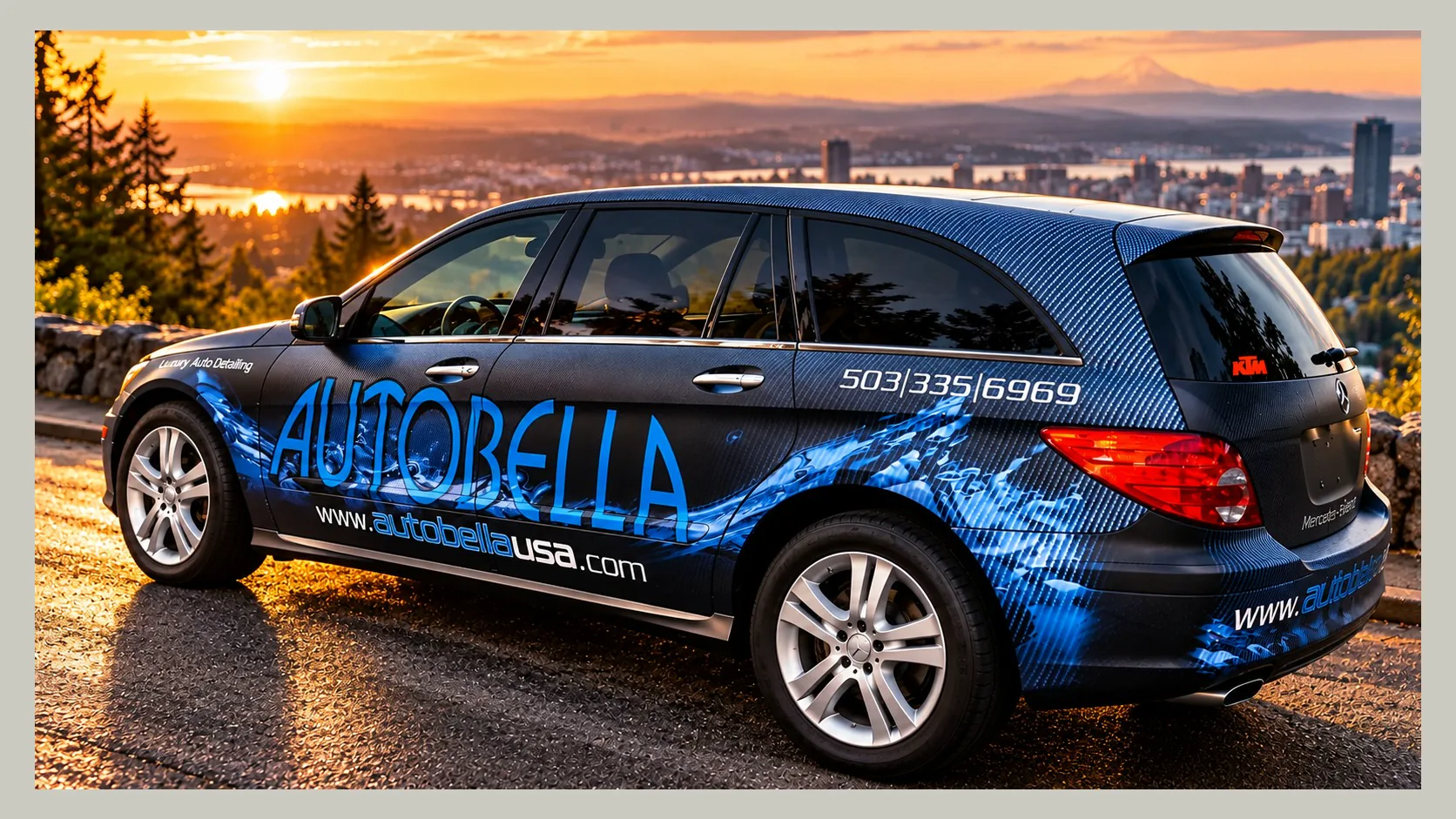
A strong vehicle graphic has a simple job: help the right person recognize the business and understand what it offers. The design has to work on the actual vehicle, at the distances and angles where people will see it. Start with the message and the vehicle, then build the artwork around both.
Choose the one message that matters most
Before choosing colors or effects, decide what a viewer should remember. For most service vehicles, that means the business name or logo, the service category, and one easy way to take the next step. Put the most important information where it is easiest to see. Supporting details can live on the rear doors or a parked-vehicle panel.
- Use a short service description instead of a long list.
- Make the logo and contact path distinct from decorative graphics.
- Use contrast that remains clear in daylight, shade, and different paint colors.
- Keep small text and fine details off areas that are difficult to see from a normal viewing distance.
Design for the vehicle, not a flat rectangle
Doors, windows, handles, seams, trim, wheel arches, and body curves affect where artwork can sit and how it will read. A layout that looks balanced on a computer screen can shift when it crosses a sliding-door gap or disappears into a window. Ask to review the design on a template that matches the vehicle’s year, make, model, and body configuration.
For a fleet, create a repeatable layout system. Keep the logo, colors, and primary message consistent, then adapt the composition to each vehicle shape. The goal is a recognizable family of vehicles, not a forced copy-and-paste that ignores different bodies.
Proof the production details
Before approval, check spelling, phone number, website, service wording, colors, and the placement of every important element. Review the design on all sides and at realistic scale. Ask how the artwork handles seams, openings, and removable parts, and confirm which surfaces are included in the project. If a vehicle has existing paint damage or repairs, discuss that before installation because surface condition can affect preparation and results.
A good proofing process catches costly mistakes while the design is still easy to change. It also gives the installer a clear plan for how the finished graphic should align across the vehicle.
Plan the next step
Bring your vehicle details, logo files, brand colors, and the action you want a potential customer to take. Autographs can help plan graphics for a single work vehicle or a coordinated fleet in the Portland and Vancouver area.